Showing posts with label SAP FSPL. Show all posts

Monday, 24 August 2020

SAP S/4HANA -Financial Services for Intelligent Enterprise - IFRS is possibility of a wider financial transformation rather short sight regulatory project

For the Banking, financial services and insurance (BFSI)- the risk modelling potential loss / risk is a complex task, and to be close to accuracy (probability), strong need of a correct quality data in shortest time frame is inevitable. 

Either it is the IFRS accounting standards (IFRS9, IFRS17), or internal business operational model simulation or meet the Capital Adequacy Directive or the IFRS`7 requirements in the Life or property or any other insurance policies valuations with changing market volatility. Major challenges is to climb fast with definite targets/ milestone stipulated by external  standard-setting bodies. 

There are clear indication that current climate is changing, natural  disastrous situation like wildfires, hurricane, storms, Covid job losses or the health hazards issues need further a better (revised) Risk assessment including allocation of provisions and claim stress testing to meet operational capital. these Key Challenges  need IT solution to meet shortest time frame implementation requirements.

A prefect answer is ready to deploy product with minimum development/customisation need such as like S4 HANA with Add on FSPL, (SAP Bank/ Insurance analyzer with Model company-The SAP company is pre packaged, ready to use, end to end reference solution tailored to industry or line of business ), the HANA in-memory( A column-oriented relational database with improved automation, efficiency, through  he machine learning  has validated the  Answers. 

The actuarial risk analytics or the finance instrument impairment modelling such as loss potential using complex models, like coverage (PD, EAD, LGD, predicated modelling, regression, time series with loss simulation with in depth data is enabling population of business operation risk assessment. the key figures for behavioural aspects of individuals data is ready to inject in ready to use Model Company business contents importing business partner and finance transactions data. 

The S4 HANA solution for the finance and insurance with IFRS17 HAS a STRONG possibility of a FULL financial transformation with intelligent enterprises, meant capacity for a logical finance transformation with industry best practices from quick quote underwriting to full finance planning, problem-solution for the regulation harnessing data more effectively, improving the structure of finance function and to better informed decision making. 

The S4HANA with FSPL using using historical data (SAP Financial Services Data Management) will help regulatory Estimated Cash Flow Preparation (ECP) as well as business development context; 

Let’s understand how the S4 HANA solution enterprise (product) are simplifying the challenges. The Fundamental for the predicative risk analyse is the need of the multi dimensional data and flexible systems processes.  the data administration, financial presentation and actuarial calculations needs data, and in minimum time to evaluate disclose(r) information to group contracts to simulate tests. As per the IFRS17, the group is a managed (often a product) of contracts as Profitable, onerous, or may become onerous (decided at inception) with a certain inception year. in the SAP HANA ( or FSPL) can use the the Master Data, Reference Data items that are required to support the transnational Grouping of the contract data at reconsideration (recognition) phase . Insurance contract life cycle data (or finance Trading and non-trading) financial data need in SAP per master contracts post classification configuration. This is data that is set up on SAP during the build and configuration process.  This type of data is not part of the migration process, as it will be transported to the production system through the SAP transport procedure is  required for valuation/ cash flows. 

I am sure organisation which were short-sighted historically with transformation has opportunity to correct system (Data) with IFRS17 programme. 

he Fundamental S4/HANA data management across product portfolio (In recognition / classification of instrument/contract  phase) will be used post measurement/valuation for validating the quality of data from lineages, historical data storage (actuaries, risk, accounting consequences figures / characteristics and operational data from any system used in solvency II or internal actuaries systems). This data is being REUSED  so that teams can asses risk dimensions using necessary required inputs for IFRS17 modelling . Here the S4 HANA, SAP Analytics with add-on of the SAP FSPL (sub ledger) can be used to migrated/import data along with Master records so that an Integrated Finance and Risk Architecture (IFRA) could be achived. 

My working experiences in IFRA experiences and in S4 HANA implementation using SAP Bank analyzer (ver 7.0.8.0) and now the FSPL- SP3 with Model Company on S4 HANA is clearly proving me that 'SAP knows the pain point of industry' and come-up with an intelligent solutions. The SAP BA consultants/ business users can tell how slow and painful used to be running the SAP BA function in the traditional database for calculating the cash flows, (KDV), when there is changes through movement type or assess effect of new contracts (some time overnight 2-4 hrs) with new dimensions. Now with S4 HANA, it is possible in minutes.  I remember one changes in the master data records with second + primary business transactions used to take 2-5 hrs to calculable, 

with S4 HANa and FSPL updates / simulating results using changing variable such as interest rate and few other economical variable to business transaction inputs,  taking max 35 minutes (1m policy records), shorted EOD /period end not only with logic but also with performance. 

The Data ageing in the Bank Analyzer to move large volumes of data in the Results Data Layer (RDL) from the Source Data Layer (SDL) within a database changes has also been improved with more working memory in the FSPL (HANA DB). Now with HANA DB this is inbuilt for the controls,  the movement of data by specifying a data temperature scenarios. (Data that is only used rarely or that is no longer accessed can be moved from a "hot area" (partition in the working memory) to a "cold area" (partitions on storage). Data that is frequently used remains in the hot area.  The Running Business Events Analytical with adjustment (update) accruals and deferrals providing  up-to-date interest and commission on the FLY NOW or at least in shortest time (this is true intelligent and agile)....I can tell FSPL on the HANA a is the answer for the Risk and finance to meet the need of complexity...

Key process challenges are addressed with well defined business contents..: 

https://help.sap.com/viewer/6efb236dcca1451cbff97314d2334762/1809.001/en-US/2976728383bd42e6bb2cd86a83b1bc02.html

Please ping me for further documentation or  architects if there is any requirement or considerations for the IFRS9 /regulatory or  IFRS17 with Insurance Model company business contents and other Detail end to end ECL (expected cash flow approaches)  

TO be Logical ..

The Insurance industry has a big hill to climb whilst implementing the IFRS17. The IFRS is certainly a possibility (opportunity) of a wider financial transformation rather a short sight regulatory project. The SAP S4HANA solution for the Financial Services such intelligent BFSI with FSPL (sub ledger) and Finance database with analytics using SAP Profitability and Performance Management (PaPM) has the answer for a future ready FI transformation, It is not only to meet the regulation reporting but also deliver a combined financial statements in and/or carve-out cases, or the Covid 19 impacted FI statements or the drive the CFO decisions running parallel ledger.  As well said, every challenge gives opportunities, and the IFRS is opportunities to transform finance enterprises, revamping entity model or have a improved digital ready IT systems, an improved ML/AI operational data to ease future business in emerging complexities. Top 5 Cs have already rolling -up sleeves’  interpreting the IFRS, same time SAP has delivered Financial products with Sub ledger accounting ‘Old wine in new bottles’ but using more intelligence, more digitally improved crossword solution between risk/ actuaries and applying an integrating IFRA risk and finance structure......

4kar.png

TO  BE Landscape (used for this  study) 

https://help.sap.com/viewer/6efb236dcca1451cbff97314d2334762/1809.001/en-US/2976728383bd42e6bb2cd86a83b1bc02.html


@Rajesh Sharma

Saturday, 22 August 2020

The SAP implementation, delivery and methodology approach for the SAP BA/ IA Analyser techniques to achieve the IFRS Regulatory reporting using SA(FSPL) with HANA

SAP techniques applicable at a basic level on sap package / component solution customization –I call this Vision of Finance Transformation From daily routine to supporting growth and new business models

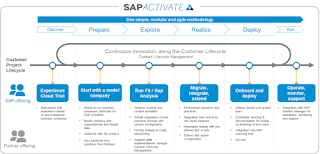
 Not applicable for the  SAP upgrade but to the new/ greenfield implements new SAP Bank analyser, or insurance analyser - on HANA, (FSPL).  The three keys to be successful -IFRS 9 and IFRS 17 implementation. How the SAP Activate approach (HANA with Solution Manager) Delivery approach can help in Close alignment of all project streams. See Diagrem below.. 


 There are many Opportunities for alignment between both (IFRS9 and IFRs17) implementations can be identified in the early project phases starting from the FIT Gap analyses, the Analyse and classify instrument and contracts affected by both standards to Full end to end testing. Pease contact me for any consultation requirement, or formal engagement to provide lesson learned...  

·     How to Address organizational responsibilities aligning actuaries, risk, finance, ALM and accounting etc (Worksop, Q&A, Show and tell session etc)

·         How to Identify shared risk and actuarial data and Conduct parallel analyse (SDL, DDL) and RDL, testing and pilot phases for increased efficiency (POC of FSPL business contents using KDV, and other valuation run)

2) Harmonized data collection inside the FSPL (SDL using reuse of Business partner)


Designing a harmonized data management strategy an efficient and reliable outputs, which can be achieved for the h
armonization of IFRS 9 and IFRS 17 requirements (single version of truth)        

A profitable ALM strategy to implement using agile integrated transformation approach is our proved methodology in an integrated transformation approach for IFRS 17 and IFRS 9 provides multiple benefits and allows raising synergies (expert consultancy around):

·         Early identification and mitigation of dependency risks (business model review – e.g. FVOC- SPL)

·         Quick responsibility clarification (actuarial, risk, accounting department) of the existing risk models

·         Consistent accounting principle interpretations against the business model

·         Avoidance of Accounting mismatches

·         Easier Golden Source identification and data harmonization

·         Consistent auditor approvals


2) Harmonized data collection inside the FSPL (SDL using reuse of Business partner)


AS IS - disintegrate, too many small systems , no harmonisation of data... too risky to manage change,, 


TO BE 

SAPs IFRS17 Subledger, Data Management and Finance and Risk Calculation Engines. the S4HANA FSPL -Clint can choose a single-instance installation (one software stack) or a dual instance installation (two software stacks) as illustrated below. In a single-instance deployment, you deploy the back-end and front-end together, whereas in a dual instance installation, you deploy them separately.


 The IT architecture and infrastructure harmonization for valuations and CSM calculations using SAP HANA, BW/BI – and FPSL add on and Joint source for market and valuation data, such as interest rates and risk assessments on the FSPL// 


Wednesday, 12 February 2014

SAP Bank Analyzer Implementation Strategy -High Level Implementation / Overview (High level Process)


 SAP Bank Analyzer –

This article will explain best approach and Implementation approach for the SAP Bank Analyzer solutions, upgrade or integration. Recently I've had opportunity to work on two demo solutions for a banking system SAP Bank analyzer implementation within risk and profit analyses team and a short term test strategy development for rapid SAP bank analyzer implementation within an investment bank.

This article will explain best approach to implement SAP Bank Analyzer solution 8.0 or  upgrade from or integration. Recently we worked on two demo solutions for a banking risk system SAP Bank analyzer implementation within risk and profit analyses team and a short term test strategy development for rapid SAP bank analyzer implementation within an investment bank.


In next couple of blogs we will detail an effective way to test SAP Bank analyzer and its individual components.

 - SAP BA - Objectives in upgrade and in new Implementation Solution Architecture to  future looking business Architecture      
      

As IS Approach- There could be two scenarios either – Accounting IFRS implementation or risk architecture – see below diagram for both .. the Accounting IFRS implementation (accounting consequence, FSPL scenarios)


B) Risk architecture scenario


Transformation, and loading process (ETL process).  The SDL saves, consolidates, and manages the original data. At the same time it provides interfaces to additional operational systems.
The primary objects of the Source Data Layer (SDL) and their scenario versions are a flexible way of saving master data, flow data, and market data. They also group this data into units that belong together logically from a business perspective. This ensures that the Bank Analyzer components that are linked to the SDL have a standard, consistent data source.In addition to storing primary object data, the SDL provides the following primary objects functions for applications linked to it:
 See SDN for more detail

●     Access to source data
●     General functions for source data layer
●     Methods for source data
●     General access to corrections
●     Tools
 
Integration
The SDL provides both the central original data basis and a part of the underlying infrastructure for linked applications. It is therefore a key element in ensuring the consistency of data and results.
 <To be updated soon) - if you need detail document, please email your request

 Category 1 - Business transactions

  • Post external business transactions
  • Update secondary business Transactions

Category 2 - Date valuation
 
  • Key date valuation for all financial positions
  • Financial Positions for Period (PICC) event processing etc
  • Update costing for period before GL and during transferring GL documents
  • Calculation for all PICC
  • Balance carry forward etc..  Create FT and BT, Period Open( Previous year),Set the posting date,register contract, Open new fiscal and End-of -day processing before you click on Execute BCF

Category 3 – SAP GL Postings

  • GL Connector and document generation – Journal and document review and finance reconciliation of the GL, Profit centre and any material code posting review
  • Balance processing step 1 - (SV)
  • Balance processing step 2 - (ATP)

Testing of the accounting for FI with Aggregation (AFI) for Accounts Results before RDL and GL
Category 1 – position management
  • Generate Finance Instruments position
  • Aggregate Financial Transactions
  • Prepare Business Transactions for Aggregation
  • Process Reassignments for Business Transactions
  • Aggregate Business Transactions
  • Aggregate Current Accrual Results
  • Process Reassignments for Accrual results
  • Aggregate Retroactive
  • Accrual Results
  • Derive Application Events for source data aggregation

Imported Sub-Ledger Documents (ISD) for Results
 ISD sub-ledger import
- Please email if you need full info ....


SAP S/4HANA -Financial Services for Intelligent Enterprise - IFRS

About Us- SAP TAO Ltd - IT Consulting & Services

 SAP TAO Ltd - IT Consulting & Services SAP TAO is a specialist provider of SAP and Non SAP software development and SAP Enterprise int...