“Time is a great teacher, but unfortunately it kills its students." Hector
Berlioz. New Beginning, New era, new times – Covid19 has proved the
feasibility, and in some occasion more productive being working virtually, not
only the Carbon footprint reduction but also a cost effective measure to most
of the industry sectors where unlikeliest case studies were imposed by the old
school. Either be executive board, diplomat conferences, the amount of
economical activities being conducted online has experienced explosive growth,
either be this week’s WHO meeting or the head of states conducting diplomat
levels briefing. Isn’t this a paradigm shift to meet Co2 fossil fuel reduction?
Anyway, Question is what the future of job and employment more is and
more industry business sectors or secondary platforms adopting IT led
automation like Manychat, ChattyPeople, Bot.Robotics to streamline process as
well cost reduction, where the rest of manpower will be deployed. Same question
was raised early 90sh. During this Covid 19, considering that virtually most of
the industry sphere has forced to transition to possible online service or to
do business with digitalisation aspects, there's certainly no shortage of
further potential for employment, but there's also plenty of so-called Blue
Ocean and the side effect on the economical growths without right skill and
education, we can also sense old school still not able to absorb this
shift..Most of influential industry sectors like aerospace, automobile, there
was nothing counteracts to the fossil fuel except wealth making. The
IT led services such as online education, e-commerce, virtual project
management or the large scale global business changes were possible but not
enforced, given more off shoring models, IT services were in approx range of
20 -80% models, this has been proved possibility of be >+90%
virtually. Thanks to the internet and smartphones and more digitalisation for
the shift to the occupational probability. offcourthis also prove shift of wealth to east theory..
Sunday, 10 May 2020

Covid-19 - Impact and improvement in agile frameworks - more money value driven deliveries..
Large-scale agile frameworks comparison, VFQ, PACE, SAFe vs DAD in large. Enterprise context point of view...
Rajesh Sharma

Start with the basics: Learn scrum and agile
Large-scale agile frameworks build upon many of the ideas, concepts, and techniques used in scrum and other lean and agile frameworks. Scrum is the most common agile framework. In fact, it is referred to so often in agile literature that many people use the terms scrum and agile interchangeably. For those new to agile, the first recommendation would be to get some basic agile and scrum training. You wouldn't want to start building a house without knowing how to use a hammer. As such, it's important to learn basic terminology, concepts, and techniques, providing you with the building blocks for understanding any other agile framework.
Those who have been working in an agile environment with small teams will have an easier time extending their current practices to a large-scale framework. Scrum provides the basic tools, and the large-scale frameworks will provide some additional tools.

Continuing with the construction analogy, scrum will give you what you need to install the electrical, plumbing, and drywall, and to build furniture for the house. However, if you want a blueprint in which there is some consistency in the way the rooms are laid out, you need a solid architecture and agreement on certain standards so there's a common look and feel throughout the house. Large-scale agile frameworks provide that kind of architecture. They give you the tools to help coordinate larger projects so that teams can build on a solid foundation, take advantage of reusability. and maintain consistency of agreed-upon standards. More about adopting Software test automation for your organisation, enterprise,
More about adopting Software test automation for your organisation, or SAP enterprise to be adaptive to scaled framework/// –what is suitable methodology and tools to your organisation either be CD/CF or tool choice like R#TOSCA, live compare, worksoft, microfocus, TOSCA,SAP Robotic Process Automation, panaya.
Please reach out for a proven tool study custom your needs that we guarantee RIO...#SAP TAO Limited.
Suitable agile methodology and tools to your organisation will be proved with best RIO. custom exclusive to organisation case.
What is Scaled Agile Framework (SAFe)?
The Scaled Agile Framework, developed by methodologist Dean Leffingwell, uses a combination of existing lean and agile principles and combines them into a methodology for large-scale projects.
SAFe includes Team, Program, and Portfolio processes. At the Team level, the techniques outlined are those used in scrum, recommending two-week sprint cycles. At the Program level, SAFe extends scrum by using the same ideas but one level up. The Program level works on a Release Train, which is composed of five sprint cycles. There's also a sixth innovation planning sprint, which allows teams to innovate, inspect, and adapt. Roles and processes are defined at the Program level, which allows for consistency and collaboration across the project. SAFe also provides processes one level higher, at the Portfolio level, using lean principles, such as optimizing value streams to help executives and leaders identify and prioritize epics, and features that can be broken down at the Program level and scheduled on Release Trains.

What is Disciplined Agile Delivery (DAD)?
Disciplined Agile Delivery, developed by Scott Ambler and Mark Lines, is similar to SAFe in that it recommends using existing lean and scrum/agile techniques. DAD, however, aims to address areas that aren't thoroughly covered in smaller-scale agile frameworks. This framework recommends three phases: Inception, Construction, and Transition. While many agile frameworks address what DAD labels the Construction phase, DAD gives recommendations on processes that come earlier in the project (inception) and as teams prepare for delivery (transition). For this reason, DAD's strengths are in providing more guidance in the areas of architecture and design (inception) and DevOps (transition).
DAD also provides flexibility in suggesting different process guidelines for four categories of lifecycles: agile/basic, lean/advanced, continuous delivery, and exploratory. The Construction phase of agile/basic is scrum, but DAD, as in each of the four lifecycles, adds recommendations for the Inception and Transition phases. The lean/advanced lifecycle uses processes similar to Kanban, maximizing flow and minimizing work in process. The continuous delivery lifecycle focuses on mature DevOps, continuous integration, and deployment processes for projects that require frequent delivery to stakeholders. The exploratory lifecycle minimizes early planning in favor of fast delivery, gaining feedback, and incorporating that feedback into the next delivery.
Being a hybrid. DAD is a hybrid approach which extends Scrum with proven strategies from Agile Modeling (AM), Extreme Programming (XP), Unified Process (UP), Kanban, Lean Software
Development, SAFe, LeSS, and several other methods.Being open. Disciplined Agile (DA) is a non-proprietary, freely available framework as you can see from this site.

Supporting several delivery lifecycles. DAD extends the construction-focused lifecycle of Scrum to address the full, end-to-end delivery lifecycle from project initiation all the way to delivering the solution to its end users. It also supports lean, continuous delivery, program (team of teams), and exploratory/Lean Startup versions of the lifecycle. Unlike most agile methods, the DA toolkit doesn’t prescribe a single lifecycle because it recognizes that Context Counts and Choice is Good.
Addressing all aspects of solution delivery. DAD includes advice about the technical practices such as those from Extreme Programming (XP) as well as the modeling, documentation, and governance strategies missing from both Scrum and XP.
Pros and cons of each framework
SAFe has been criticized for being too prescriptive, not allowing teams as much flexibility in process decisions. Some critics feel that SAFe is not pure agile because there is more upfront planning and some top-down processes. Having too much process definition implies a lack of flexibility in approach, which goes against one of the primary agile characteristics of adaptability.
Though agile purists may feel this approach is too structured, that may be exactly what's needed for those who are transitioning from a more traditional environment, especially in the context of a larger project. A common failure for agile adoption is the difficulty in introducing such a major cultural change to an organization. SAFe provides the structure that may make for a smoother transition to an agile framework. SAFe also follows agile practices of inspecting and adapting, even providing an innovation sprint and stressing autonomy and decision-making for the knowledge workers.
With four lifecycle models, DAD provides more flexibility in project guidance and recommendations for best processes within each type of project. In the construction analogy, DAD provides a basic framework for building a cottage, a mansion, a townhouse, or a mobile home. Rather than providing a prescriptive blueprint, it provides guidance on the types of tools and processes you might want to use, depending on the type of house you are building. Though this flexibility may be appreciated by those with a good understanding of agile, it might not provide enough guidance for those who are transitioning from traditional models. Marketplace adoption for DAD is slow compared with SAFe. And though DAD and SAFe are more complementary than competitive, due to the lack of specific guidance, experienced coaches and consultants are more likely needed to successfully implement DAD.
What's next?
Though the ever-growing number of frameworks and the various opinions about them can be confusing, they demonstrate the adaptability that agile is known for. Continuous evolution and debate, though frustrating for those who want definitive answers, lead to one thing that all agile methodologists agree on: the need to inspect and adapt. The experiences of those who use the frameworks, both positive and negative, help provide data for the next "version," whether that be improvement of a current framework or a new framework altogether.
More about adopting Software delivery and automation for your organisation, or SAP enterprise, –what is suitable methodology and testing tools to your organisation either be worksoft, microfocus, TOSCA,SAP Robotic Process Automation, panaya. Please reach out us for a proven tool study custom your needs that we guarantee RIO...
Next article will be with some data of maturity and delivery experiences of each framework within the large enterprises.....
Rajesh Sharma
Though everyone is going agile these days, a common complaint is that agile development doesn't scale well and now due to Covid-19 impact, need more value for money in less time...forecast of fast speed with desired quality.
Many of the concepts and recommendations, like using small but effective, self-managing but result oriented teams, might be working well for small projects. But guidance may be lacking when it comes to coordinating multiple teams, large work force working on a large-scale project, especially in early phases of the project, before design or code begins or actual delivery start.
A number of agile frameworks are available for large-scale enterprise projects such a global SAP roll-out, upgrade or scaled M&M impact or CARB-out SAP, but the first step in choosing one to fit your organization's needs is education and experts skilled who has practice of most of the suitable frameworks.. This article focuses on 2 of the popular large-scale agile frameworks: VFQ- Scaled Agile Framework (SAFe) and Disciplined Agile Delivery (DAD). It provides a quick overview but also guide every step of the way to educate, adopt and exercise the framework. I will further extend elements of how to adopt and describes the strengths and weaknesses of each framework, and looks at what is ahead for the frameworks that is important for implement/ exercise..

Start with the basics: Learn scrum and agile
Large-scale agile frameworks build upon many of the ideas, concepts, and techniques used in scrum and other lean and agile frameworks. Scrum is the most common agile framework. In fact, it is referred to so often in agile literature that many people use the terms scrum and agile interchangeably. For those new to agile, the first recommendation would be to get some basic agile and scrum training. You wouldn't want to start building a house without knowing how to use a hammer. As such, it's important to learn basic terminology, concepts, and techniques, providing you with the building blocks for understanding any other agile framework.
Those who have been working in an agile environment with small teams will have an easier time extending their current practices to a large-scale framework. Scrum provides the basic tools, and the large-scale frameworks will provide some additional tools.

Continuing with the construction analogy, scrum will give you what you need to install the electrical, plumbing, and drywall, and to build furniture for the house. However, if you want a blueprint in which there is some consistency in the way the rooms are laid out, you need a solid architecture and agreement on certain standards so there's a common look and feel throughout the house. Large-scale agile frameworks provide that kind of architecture. They give you the tools to help coordinate larger projects so that teams can build on a solid foundation, take advantage of reusability. and maintain consistency of agreed-upon standards. More about adopting Software test automation for your organisation, enterprise,
More about adopting Software test automation for your organisation, or SAP enterprise to be adaptive to scaled framework/// –what is suitable methodology and tools to your organisation either be CD/CF or tool choice like R#TOSCA, live compare, worksoft, microfocus, TOSCA,SAP Robotic Process Automation, panaya.
Please reach out for a proven tool study custom your needs that we guarantee RIO...#SAP TAO Limited.
Suitable agile methodology and tools to your organisation will be proved with best RIO. custom exclusive to organisation case.
What is Scaled Agile Framework (SAFe)?
The Scaled Agile Framework, developed by methodologist Dean Leffingwell, uses a combination of existing lean and agile principles and combines them into a methodology for large-scale projects.
SAFe includes Team, Program, and Portfolio processes. At the Team level, the techniques outlined are those used in scrum, recommending two-week sprint cycles. At the Program level, SAFe extends scrum by using the same ideas but one level up. The Program level works on a Release Train, which is composed of five sprint cycles. There's also a sixth innovation planning sprint, which allows teams to innovate, inspect, and adapt. Roles and processes are defined at the Program level, which allows for consistency and collaboration across the project. SAFe also provides processes one level higher, at the Portfolio level, using lean principles, such as optimizing value streams to help executives and leaders identify and prioritize epics, and features that can be broken down at the Program level and scheduled on Release Trains.

What is Disciplined Agile Delivery (DAD)?
Disciplined Agile Delivery, developed by Scott Ambler and Mark Lines, is similar to SAFe in that it recommends using existing lean and scrum/agile techniques. DAD, however, aims to address areas that aren't thoroughly covered in smaller-scale agile frameworks. This framework recommends three phases: Inception, Construction, and Transition. While many agile frameworks address what DAD labels the Construction phase, DAD gives recommendations on processes that come earlier in the project (inception) and as teams prepare for delivery (transition). For this reason, DAD's strengths are in providing more guidance in the areas of architecture and design (inception) and DevOps (transition).
DAD also provides flexibility in suggesting different process guidelines for four categories of lifecycles: agile/basic, lean/advanced, continuous delivery, and exploratory. The Construction phase of agile/basic is scrum, but DAD, as in each of the four lifecycles, adds recommendations for the Inception and Transition phases. The lean/advanced lifecycle uses processes similar to Kanban, maximizing flow and minimizing work in process. The continuous delivery lifecycle focuses on mature DevOps, continuous integration, and deployment processes for projects that require frequent delivery to stakeholders. The exploratory lifecycle minimizes early planning in favor of fast delivery, gaining feedback, and incorporating that feedback into the next delivery.
Being a hybrid. DAD is a hybrid approach which extends Scrum with proven strategies from Agile Modeling (AM), Extreme Programming (XP), Unified Process (UP), Kanban, Lean Software
Development, SAFe, LeSS, and several other methods.Being open. Disciplined Agile (DA) is a non-proprietary, freely available framework as you can see from this site.

Supporting several delivery lifecycles. DAD extends the construction-focused lifecycle of Scrum to address the full, end-to-end delivery lifecycle from project initiation all the way to delivering the solution to its end users. It also supports lean, continuous delivery, program (team of teams), and exploratory/Lean Startup versions of the lifecycle. Unlike most agile methods, the DA toolkit doesn’t prescribe a single lifecycle because it recognizes that Context Counts and Choice is Good.
Addressing all aspects of solution delivery. DAD includes advice about the technical practices such as those from Extreme Programming (XP) as well as the modeling, documentation, and governance strategies missing from both Scrum and XP.
Pros and cons of each framework
SAFe has been criticized for being too prescriptive, not allowing teams as much flexibility in process decisions. Some critics feel that SAFe is not pure agile because there is more upfront planning and some top-down processes. Having too much process definition implies a lack of flexibility in approach, which goes against one of the primary agile characteristics of adaptability.
Though agile purists may feel this approach is too structured, that may be exactly what's needed for those who are transitioning from a more traditional environment, especially in the context of a larger project. A common failure for agile adoption is the difficulty in introducing such a major cultural change to an organization. SAFe provides the structure that may make for a smoother transition to an agile framework. SAFe also follows agile practices of inspecting and adapting, even providing an innovation sprint and stressing autonomy and decision-making for the knowledge workers.
With four lifecycle models, DAD provides more flexibility in project guidance and recommendations for best processes within each type of project. In the construction analogy, DAD provides a basic framework for building a cottage, a mansion, a townhouse, or a mobile home. Rather than providing a prescriptive blueprint, it provides guidance on the types of tools and processes you might want to use, depending on the type of house you are building. Though this flexibility may be appreciated by those with a good understanding of agile, it might not provide enough guidance for those who are transitioning from traditional models. Marketplace adoption for DAD is slow compared with SAFe. And though DAD and SAFe are more complementary than competitive, due to the lack of specific guidance, experienced coaches and consultants are more likely needed to successfully implement DAD.
What's next?
Though the ever-growing number of frameworks and the various opinions about them can be confusing, they demonstrate the adaptability that agile is known for. Continuous evolution and debate, though frustrating for those who want definitive answers, lead to one thing that all agile methodologists agree on: the need to inspect and adapt. The experiences of those who use the frameworks, both positive and negative, help provide data for the next "version," whether that be improvement of a current framework or a new framework altogether.
More about adopting Software delivery and automation for your organisation, or SAP enterprise, –what is suitable methodology and testing tools to your organisation either be worksoft, microfocus, TOSCA,SAP Robotic Process Automation, panaya. Please reach out us for a proven tool study custom your needs that we guarantee RIO...
Next article will be with some data of maturity and delivery experiences of each framework within the large enterprises.....
Tuesday, 12 June 2018
Successfully passed C_TS4FI_1709 - SAP HANA for Financial Accounting
Thanks

·
Financial Closing> 12%
·
General Ledger Accounting> 12%
·
Accounts Payable & Accounts Receivable>
12%
·
Asset Accounting> 12%
·
SAP Financials Cross Topics> 12%
·
SAP HANA, SAP S/4HANA, & SAP Fiori8% -
12%
SAP
S/4HANA Financial Accounting Sample Questions:
Response:
Congratulation on successfully attaining SAP Hana finance accounting [1709] certification................. Score 86% in SAP S/4 HANA Financial Accounting... Fellows, thanks a lot for your help and guidance ....
I have put togrther
some useful info purely out of my experience here, - Guys honest advice, for some reason pearsonvue
does not have this Exams yet , hence if you are not fully confident and ready for taking test, might like to wait
for few more months.
As you know, upon unsuccessful on first try AT PEARSON, you may be able to retake the same, under 1 months cooling period on pearson..
ELSE USE
https://training.sap.com/certification/c_ts4fi_1709-sap-certified-application-associate---sap-s4hana-for-financial-accounting-associates-1709-g/
As you know, upon unsuccessful on first try AT PEARSON, you may be able to retake the same, under 1 months cooling period on pearson..
ELSE USE
https://training.sap.com/certification/c_ts4fi_1709-sap-certified-application-associate---sap-s4hana-for-financial-accounting-associates-1709-g/
After passing 3rd
SAP Certifications,
I thought it would be good for me to share my experiences, tips and ideas and honest advice here with fellow members, with the user n passing a SAP Certification it seems a fair game and easy to crack but in reality confidence does not come until we run some mock, online test, or practice some real scenarios. AND as you know, especially with latest subjects / application like HANA hana SF, AA, HANA BW BI, SAP EWM, it is difficult to crack technical application specific questions but being subject matter experts, SMEs like finance accounting or any other specialisation area who have has ECC FI, CO or other module consultancy experiences, I think 40 to 45 % question would easy to crack form professional experiences, this i am saying form Finance accounting or banking perspective ...
From accounting perspective and old world of ECC Eph FICO the Hana Finance 1705 is easy, No guarantee of my statement on the 1607 Professional, Suggest a good read of S4F10 Business Processes in Financial Accounting in SAP S/4HANA/....
I know SAP Certification is a tensed affair not because of its toughness, hardship but, because of the money involved in it (avoid gambling or gambling wth confidence or luck J- all true , when you’ve time & money.. I would suggest attending SAP Authorised Training Institutes.. Ping me or send email or need more nfor
I thought it would be good for me to share my experiences, tips and ideas and honest advice here with fellow members, with the user n passing a SAP Certification it seems a fair game and easy to crack but in reality confidence does not come until we run some mock, online test, or practice some real scenarios. AND as you know, especially with latest subjects / application like HANA hana SF, AA, HANA BW BI, SAP EWM, it is difficult to crack technical application specific questions but being subject matter experts, SMEs like finance accounting or any other specialisation area who have has ECC FI, CO or other module consultancy experiences, I think 40 to 45 % question would easy to crack form professional experiences, this i am saying form Finance accounting or banking perspective ...
From accounting perspective and old world of ECC Eph FICO the Hana Finance 1705 is easy, No guarantee of my statement on the 1607 Professional, Suggest a good read of S4F10 Business Processes in Financial Accounting in SAP S/4HANA/....
I know SAP Certification is a tensed affair not because of its toughness, hardship but, because of the money involved in it (avoid gambling or gambling wth confidence or luck J- all true , when you’ve time & money.. I would suggest attending SAP Authorised Training Institutes.. Ping me or send email or need more nfor

BP customerid=602316..
Some info that could also be Google
C_TS4FI_1709 - SAP Certified Application Associate - The
"SAP Certified Application Associate - SAP S/4HANA for Financial
Accounting Associates (1709)" certification exam confirm that the
candidate possesses fundamental knowledge and proven skills in the area of
SAP S/4HANA Financial Accounting.
It tests that the candidate has a good overall understanding within this consultant profile and can implement this knowledge practically in projects under the guidance of an experienced consultant.
SAP Certification is known for asking tricky scenario questions. Thus, try to relate every topic with the real-time business scenario while you are preparing.
This will not only help you in solving the question well, but it helps you to master the syllabus. see Exam detail shere
See detal here :
https://blogs.sap.com/2018/03/01/certifications-for-sap-s4hana-finance/
It tests that the candidate has a good overall understanding within this consultant profile and can implement this knowledge practically in projects under the guidance of an experienced consultant.
SAP Certification is known for asking tricky scenario questions. Thus, try to relate every topic with the real-time business scenario while you are preparing.
This will not only help you in solving the question well, but it helps you to master the syllabus. see Exam detail shere
See detal here :
https://blogs.sap.com/2018/03/01/certifications-for-sap-s4hana-finance/
Notes: To ensure
success, SAP recommends combining education courses and hands-on
experience to prepare for your certification exam as questions will test
your ability to apply the knowledge you have gained in training.
Topic
Areas Covered
Please see below the list of topics and some sample question that may be covered within this certification
and the courses that cover them. Its accuracy does not constitute a legitimate
claim; SAP reserves the right to update the exam content (topics, items,
weighting) at any time.
·
Financial Closing> 12%
Perform month and year-end closing in Financial Accounting
(exchange rate valuation, post provisions etc.), create balance sheet, create
profit and loss statements, monitor closing operations using the Financial
Closing Cockpit, post accruals with accrual documents and recurring entry
documents, and manage posting periods
·
General Ledger Accounting> 12%
Create and maintain general ledger accounts, exchange
rates, bank master data and define house banks. Create and reverse general
ledger transfer postings, post cross-company code transactions, create profit
centers and segments. Clear an account and define and use a chart of accounts.
Maintain tolerances, tax codes, and post documents with document splitting.
·
Accounts Payable & Accounts Receivable>
12%
Create and maintain business partners, post invoices and
payments and use special g/l transactions, reverse invoices and payments, block
open invoices for payment, configure the payment program, and manage partial
payments. Define the customizing settings for the Payment Medium Workbench, use
the debit balance check for handling payments, define terms of payment and
payment types, explain the connection of customers to vendors, describe
integration with procurement and sales.
·
Asset Accounting> 12%
Create and maintain charts of depreciation and the
depreciation areas, asset classes, asset master data, and configure and perform
FI-AA business processes in the SAP system. Set up valuation and depreciation,
perform periodic and year-end closing processes, and explain and configure
parallel accounting.
·
SAP Financials Cross Topics> 12%
Manage Organizational Units, currencies, configure
Validations and Document Types, utilize Reporting Tools, configure
Substitutions, and manage Number ranges.
·
SAP HANA, SAP S/4HANA, & SAP Fiori8% -
12%
Explain the SAP HANA Architecture and describe the SAP
S/4HANA scope and deployment options.
Exam Preparation
Each specific
certification comes with its own set of preparation tactics. We define them as
"Topic Areas" and they can be found on each exam description. You can
find the number of questions, the duration of the exam, what areas you will be
tested on, and recommended course work and content you can reference.
Please be aware
that the professional- level certification also requires several years of
practical on-the-job experience and addresses real-life scenarios.
Well done for completing
the SAP Certified Application Associate - SAP S/4HANA for Financial Accounting
Associates (1709)
SAP
S/4HANA Financial Accounting Sample Questions:
01. During which actions does the system assign the
document number for Financial Accounting?
There are 2 correct answers to this question.
a) Park
b) Hold
c) Post
d) Simulate
02. In an asset
main number in Asset Accounting, which information can be different between
international GAAP and local GAAP?
There are 2 correct answers to this question.
a) Capitalization date
b) Net book value
c) Asset class
d) Deprecation start date
03. How does the
SAP HANA architecture improve SAP S/4HANA system performance?
Please choose the correct answer.
a) SAP HANA uses a structured
hierarchical data model with a multitude of lean prebuilt aggregated tables to
write efficient code.
b) SAP HANA makes extensive
use of database indexes providing common access paths to data in order to
improve access speed.
c) SAP HANA allows you to
build aggregate tables on top of aggregates and, in addition, special versions
of the database tables to support special applications.
d) SAP HANA organizes data in
line item tables and can aggregate data from these line item tables at runtime.
04. You want to
make the field "Reference document number" required for entry. Which
object controls this setting?
Please choose the correct answer.
a) Document type
b) Document reference key
c) Document field status
d) Document posting key
05. Which data
sections are part of every asset class?
There are 2 correct answers to this question.
a) Depreciation data section
b) Master data section
c) Account determination data
section
d) Valuation area data
section
06. Which SAP
technological product provides the platform required for SAP to support the
digital transformation of an organization?
Please choose the correct answer.
a) SAP HANA
b) SAP CRM
c) SAP Fiori
d) SAP NetWeaver
07. Which
currency types can you set in customizing activity "define setting for
ledgers and currency type"?
There are 2 correct answers to this question.
a) Material Ledger Currency
b) Transaction Currency
c) Local Currency
d) Group Currency
08. SAP HANA makes extensive use of which high-speed
hardware technology to offer more speed?
Please choose the correct answer.
a) Read-only memory
b) Solid-State Drives (SSDs)
c) Graphic Processing Units
(GPUs)
d) Multicore CPUs
09. Which
business scenarios can be handled with accrual and deferral postings?
Please choose the correct answer.
a) One-time payment for
fixing flooding damage
b) Monthly rent payments for
an office building
c) One-time payment for
one-year cloud storage service
d) Monthly subscription to a
financial newspaper
10. A vendor is
also a customer. The payment program has to clear the open items. Which setting
has to be maintained for the business partner?
Please choose the correct answer.
a) The account link
b) The same payment method
c) The alternative payer and
payee
d) The same bank details
Answer of question above:
QUESTION:
01Answer: a, c
|
QUESTION:
02Answer: b, d
|
QUESTION:
03Answer: a
|
QUESTION:
04Answer: a
|
QUESTION:
05Answer: a, b
|
QUESTION:
06Answer: a
|
QUESTION:
07Answer: c, d
|
QUESTION:
08Answer: d
|
QUESTION:
09Answer: c
|
QUESTION:
10Answer: a
|
Some of mix and
match interesting questions in HANA basic being asked in FI 1705
NO.1.
Which of the following statements is correct for external number assignment
(manual posting)?
Please choose the correct answer.
Response:
a) The number is entered by the user.
b) The number is the last document number.
c) The number must be assigned in a sequence.
d) The number is automatically assigned.
Answer: A
NO.2 What must you do to create new validations and
substitutions? Note There are 2 correct
e) A. Choose the chart of accounts
f) B. Deactivate all former validations and
substitutions
g) C. Define the area of application
h) D. Select the relevant call-up point
Answer: CD
NO.3 Which fields can you edit before posting a
parked document? Note: There are 3 correct answers to this question.
Response: A. Posting date
A. B. Document type
B. Account D.
C. Amount E.
D. Currency Answer: ACD
NO.4 Which of the following product lines does the
SAP S/4HANA system rely on for most human resource management functions? Please
choose the correct answer.
A. A. Concur
B. SAP Hybris
C. SAP SuccessFactors
D. SAP Ariba
Answer: C
NO.5 Which business partner categories are
available to manage relationships?
Note: There are 2 correct answers to this question.
Response:
A. Customer
B. Bank
C. Person
D. Organization
Answer: AD
NO.6 which of the following options are included in
the Asset Explorer?
There are 3 correct answers to this question.
Response:
A. Post documents.
B. Drill down to reports.
C. Display depreciation calculation.
D. Drill down to Financial Accounting (FI)
document.
Answer: BCD
NO.7 You can compare text patterns in your
statements using the keyword LIKE. Determine whether this statement is
true or false.
Response: A. True B. False
Answer: A
NO.8 Which two reports should you
use to create correspondence to and from customers and vendors
to enable you to verify the balance of receivables and payables?
There are 2 correct answers to this question.
Response:
A. SAPF130K
B. SAPF130E
C. SAPF130D
D. SAPF130L
Answer: AC
NO.9 When you post a manual incoming payment, which
parameters are valid for all payment documents?
Note: There are 2 correct answers to this question.
Response:
A.
Residual item
B.
Tolerance group
C.
Bank account
D.
Journal entry type
Answer: CD
NO.10 Which field status has the lowest
priority (G/L accounts)? Please choose the correct answer.
Response:
A. Optional entry
B. Hide
C. Required entry
D. Display
Answer: A
NO.11 In the integrated scenario for down
payments, in what step of the process do you enter the down payment
information? Response:
A. Invoice verification
B. Purchase order creation
C. Down payment monitoring
D. Goods receipt creation Answer: A
NO.12 Which of the following functions include
the important functions of the SAP List Viewer tool?
There are 3 correct answers to this question.
Response:
A. Defining print parameters
B. Setting filters
C. Deleting and inserting columns
D. Calculating totals and subtotals
Answer: BCD
Subscribe to:
Posts (Atom)
SAP S/4HANA -Financial Services for Intelligent Enterprise - IFRS
About Us- SAP TAO Ltd - IT Consulting & Services
SAP TAO Ltd - IT Consulting & Services SAP TAO is a specialist provider of SAP and Non SAP software development and SAP Enterprise int...
-
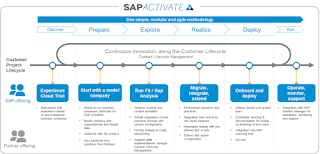
SAP S/4HANA Cloud Projects are implemented using the SAP Activate Framework. The SAP Activate Framework is more than just the SAP Activate ...
-
 Thanks Congratulation on successfully attaining SAP Hana finance accounting [1709] certification................. Score 86% in SAP ...
 -
 SAP Bank Analyzer Implementation Strategy -High Level Implementation / Overview (High level Process)SAP Bank Analyzer – This article will explain best approach and Implementation approach for the SAP Bank Analyzer solutions, upgra...
